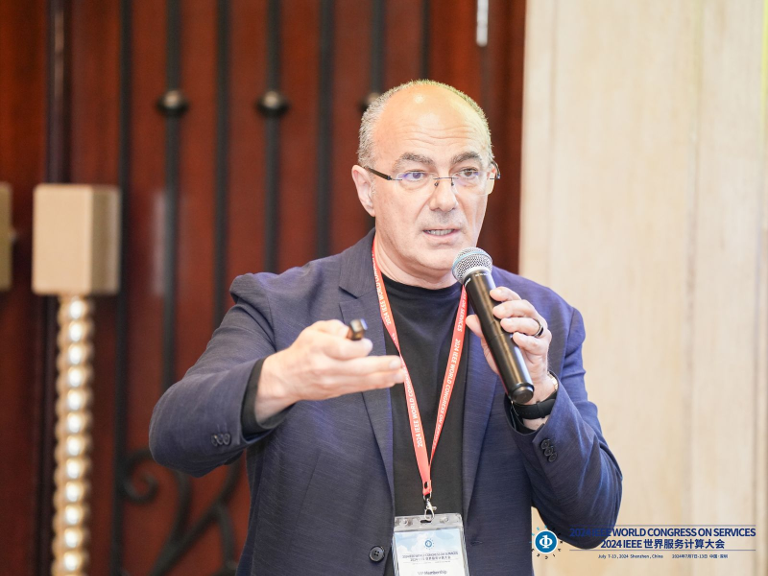
Speaker:
Prof. Schahram Dustdar
Full Professor and Head of the Distributed Systems Group
Department of Computer Science
Technische Universität Wien
Keynote 1: Active Inference for Distributed Intelligence in the Computing Continuum
Time: Wednesday
Session Chair: Aaron Striegel, University of Notre Dame
Abstract:
Modern distributed systems must operate under uncertainty, across environments, infrastructures, and applications that vary widely. Within the Computing Continuum (IoT–Edge–Fog–Cloud), applying neuroscience-inspired principles and mechanisms may help us build more flexible solutions that can generalize across diverse settings. Intriguing hypotheses in neuroscience propose that many brain functions in humans and animals arise from a small number of powerful principles. If these hypotheses hold, they could offer deep insight into how humans and animals cope with unpredictable events—and even support imagination. In this talk, we explore how Active Inference, alongside established design principles for modern distributed systems—such as elasticity, predictive equilibrium, and antifragility—can enable Distributed Intelligence across the Computing Continuum.
Bio:
Schahram Dustdar is a Full Professor of Computer Science at TU Wien, where he leads the Distributed Systems Group, and he is also affiliated as an ICREA research professor at Universitat Pompeu Fabra (UPF) in Barcelona. (https://dustdar.prof) He is widely known for pushing the frontier of elastic, dependable cloud-to-edge systems and the Computing Continuum, turning cutting-edge research into practical foundations for modern distributed intelligence. An IEEE Fellow, ACM Distinguished Scientist/Speaker, and member of Academia Europaea, he’s a sought-after keynote speaker recognized for shaping how large-scale systems adapt, scale, and stay resilient in the real world.
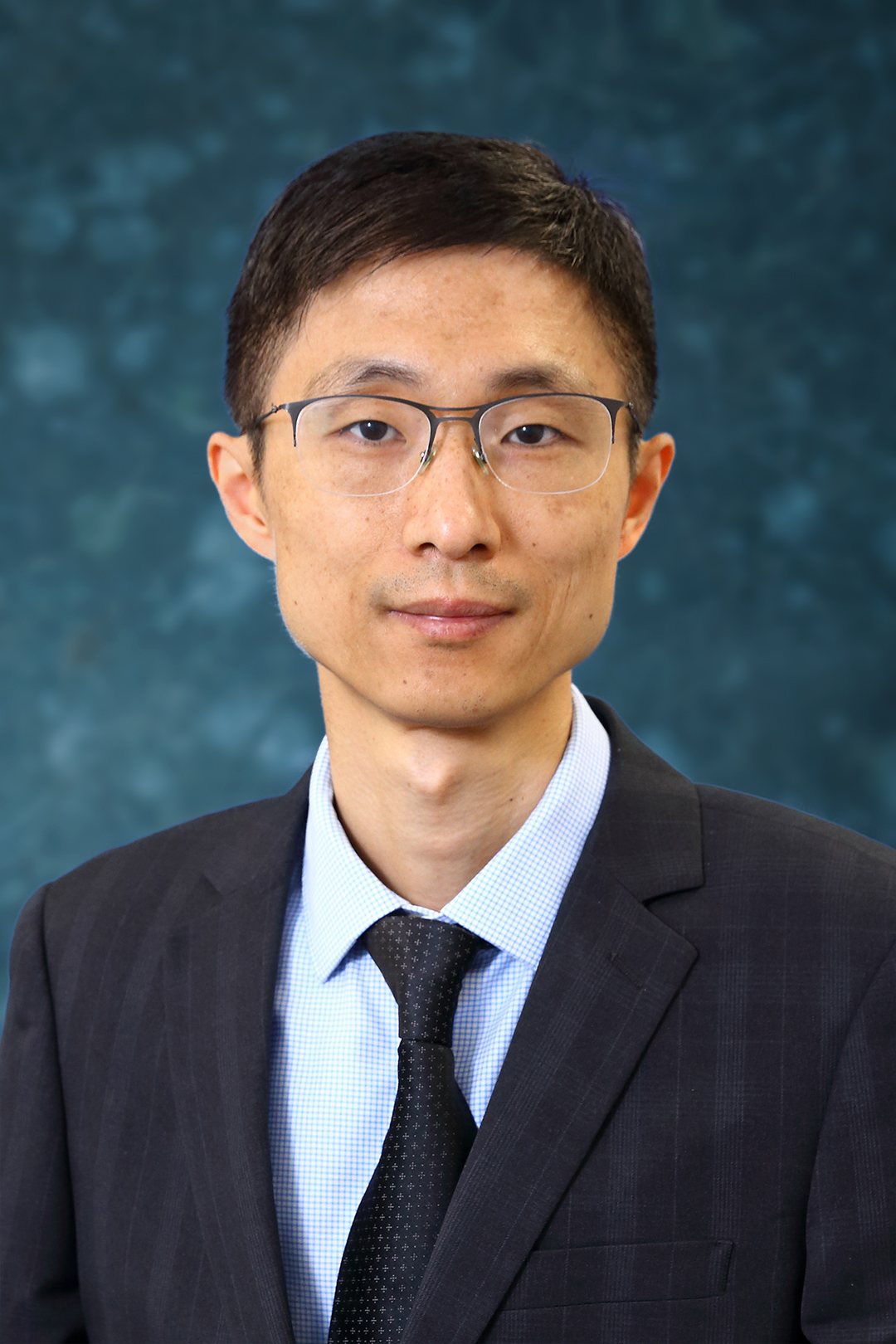
Speaker:
Guoliang Xing
Professor and Department Chair
Department of Information Engineering
The Chinese University of Hong Kong
Keynote 2: Empowering Personalized Healthcare with Multi-Modal AI and Intelligent Sensing
Time: Thursday
Session Chair:
Abstract:
Aging populations and chronic diseases are among the most urgent global health challenges today. Yet diagnostic and monitoring solutions remain largely confined to clinical settings—limiting access, delaying intervention, and preventing continuous, personalized care.AI and smart sensing technologies offer a transformative paradigm: enabling aging in place, supporting proactive chronic disease management, and bringing healthcare into everyday living environments. In this talk, we present a suite of AI-driven systems advancing this vision. We begin with ADMarker, a multimodal AI system that detects novel digital biomarkers for early Alzheimer’s diagnosis and intervention by integrating sensing technologies with large language models (LLMs). It is currently being validated in a five-year clinical trial involving 1,500 participants. Next, we introduce Myo-Trainer, the first LLM-empowered in-home rehabilitation system combining muscle-aware motion analysis with expert knowledge to deliver real-time corrective feedback. Finally, we present Nuna, a commercial smart pendant powered by on-device LLMs and multimodal sensors that generates reflective life journals capturing daily emotions, activities, and social interactions to support mental health and quality of life.At the core of these systems lies the challenge of robust multimodal human action recognition and reasoning. Progress has been limited by the lack of scalable, high-quality datasets. To address this, we introduce CUHK-X, a large-scale multimodal dataset and benchmark suite for human activity understanding. Building on CUHK-X, we have launched an international competition to accelerate the research and deployment of AI-driven personalized healthcare systems.
Bio:
Guoliang Xing received his Doctor of Science degree from Washington University in St. Louis in 2006. He is currently Professor and Chairman of the Department of Information Engineering at The Chinese University of Hong Kong (CUHK). Prior to joining CUHK, he served on the faculty at Michigan State University from 2008 to 2017. Professor Xing’s research lies at the intersection of systems, embedded AI, and healthcare. He has led the development of several pioneering mobile health technologies, including iSleep, one of the first mobile sleep monitoring systems to be commercialized and adopted by thousands of users. He is currently leading multiple large-scale clinical studies on AI for aging and chronic conditions, involving more than 1,500 participants. He is the recipient of the US National Science Foundation CAREER Award (2010), the Withrow Rising Scholar Award from Michigan State University (2014), the Research Excellence Award from CUHK (2024), and the Hong Kong Research Grants Council Senior Research Fellowship—awarded annually to only ten scholars across all disciplines in Hong Kong. His work has received six Best Paper Awards at leading international conferences. He is a Fellow of both the ACM and the IEEE.